 ApexGamerVerse
Why Control Deserves a Permanent Spot in Apex Legends
Apex Legends' Control mode, a standout limited-time mode, delivers instant action and rewarding progression that demand a permanent spot in the playlist.
Limited Time Modes have always been a core part of the Apex Legends experience, offering players a break from the standard battle royale. Among the many LTMs that have rotated through the Outlands, few have captured the community's loyalty as fiercely as Control. First introduced in Season 12 and having returned multiple times since—most recently in the 2026 mid-year event—Control continues to smash engagement records. Its mix of structured chaos, instant action, and minimal downtime makes it feel less like a temporary experiment and more like a mode that belongs in the permanent playlist. After years of repeated revivals, it is time to acknowledge what the player base already knows: Control is too good to remain a limited-time visitor.
Control reworks the Apex formula by stripping away the survival and looting elements that define battle royale. Two teams of nine players are placed on a locked-down section of a classic map, fighting to hold three capture zones. There is no scrambling for weapons upon landing because everyone spawns with a predefined loadout, complete with infinite reserve ammo. Care packages drop additional high-tier weapons throughout the match, and the only decision players need to make at spawn is which controlled point to reinforce. The result is a game flow where the looting phase simply does not exist. The moment a player loads in, they are already part of a firefight or a zone capture, which slashes the dead time that often plagues other modes.
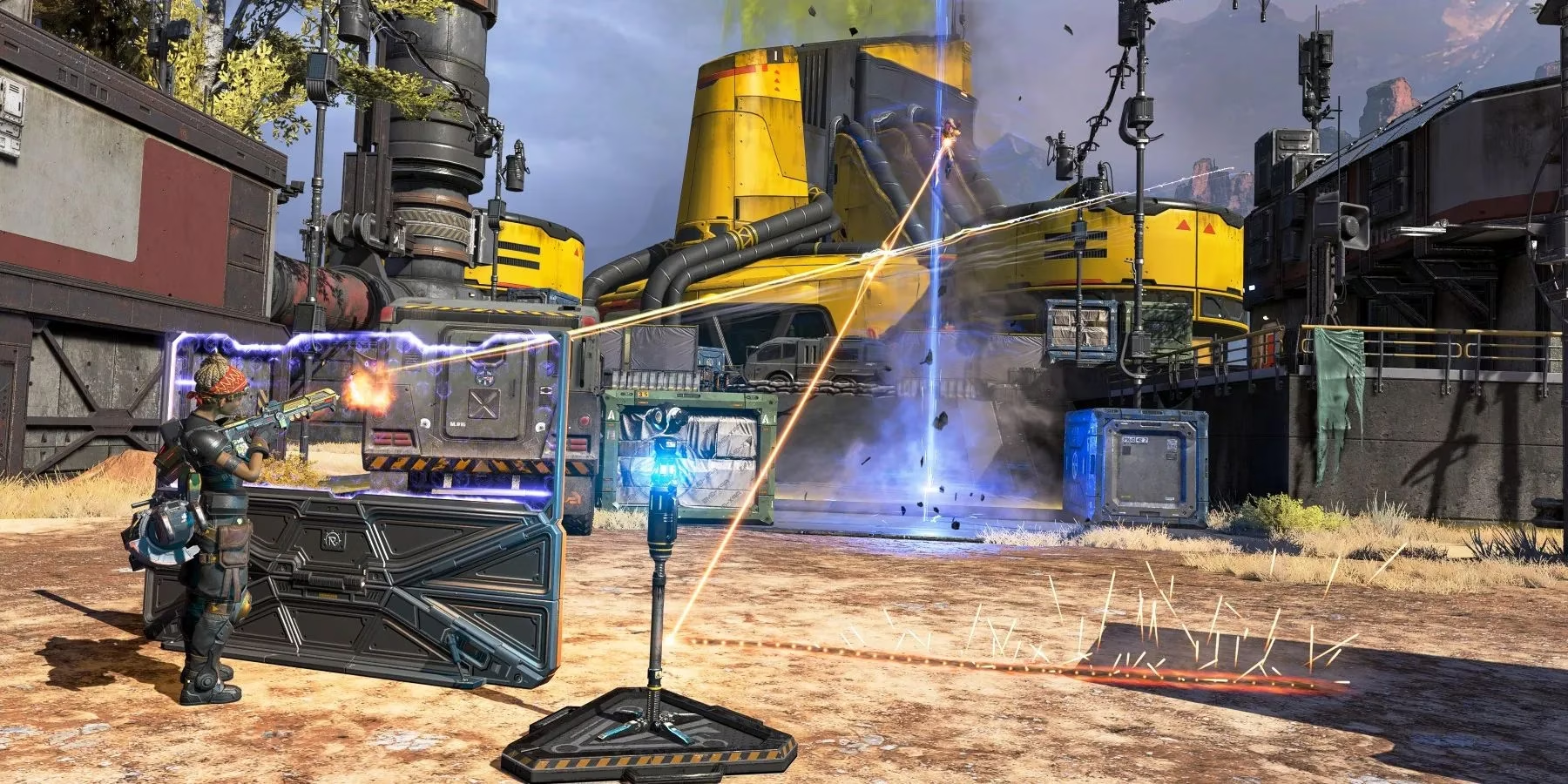
What keeps players invested match after match is the rating system. Every elimination, assist, capture tick, and neutral objective completed raises a personal rating that directly upgrades gear. Higher ratings unlock stronger armor tiers and better weapon versions, while also charging ultimate abilities at an accelerated rate. This creates a satisfying feedback loop—do well, and your character becomes more lethal, allowing for even bolder plays. Death, however, does not reset this progress entirely; players respawn after a few seconds at any friendly point or the home base, ready to jump back into the action. The short respawn timer means nobody is stuck spectating for minutes on end, and a single team wipe is never match-ending. That design choice echoes the spirit of Team Deathmatch, a mode Apex players had been requesting for years before Control arrived.
To grasp why Control thrives, it helps to examine the mode it effectively replaced. Arenas, once touted as the game's permanent competitive alternative, suffered from a fundamental pacing issue. In Arenas, a three-versus-three match began with a lengthy buy phase where players spent materials to craft their loadouts. Rounds themselves were often over in seconds, leading to a frustrating ratio of preparation to actual combat. Once eliminated, players had to wait for the next round, and because leaving incurred a penalty, they were locked into a potentially toxic team dynamic for up to nine rounds. The mode's slow, stop-start rhythm alienated casual players and even many dedicated competitors, resulting in a dwindling player count that led to its eventual removal in 2023.
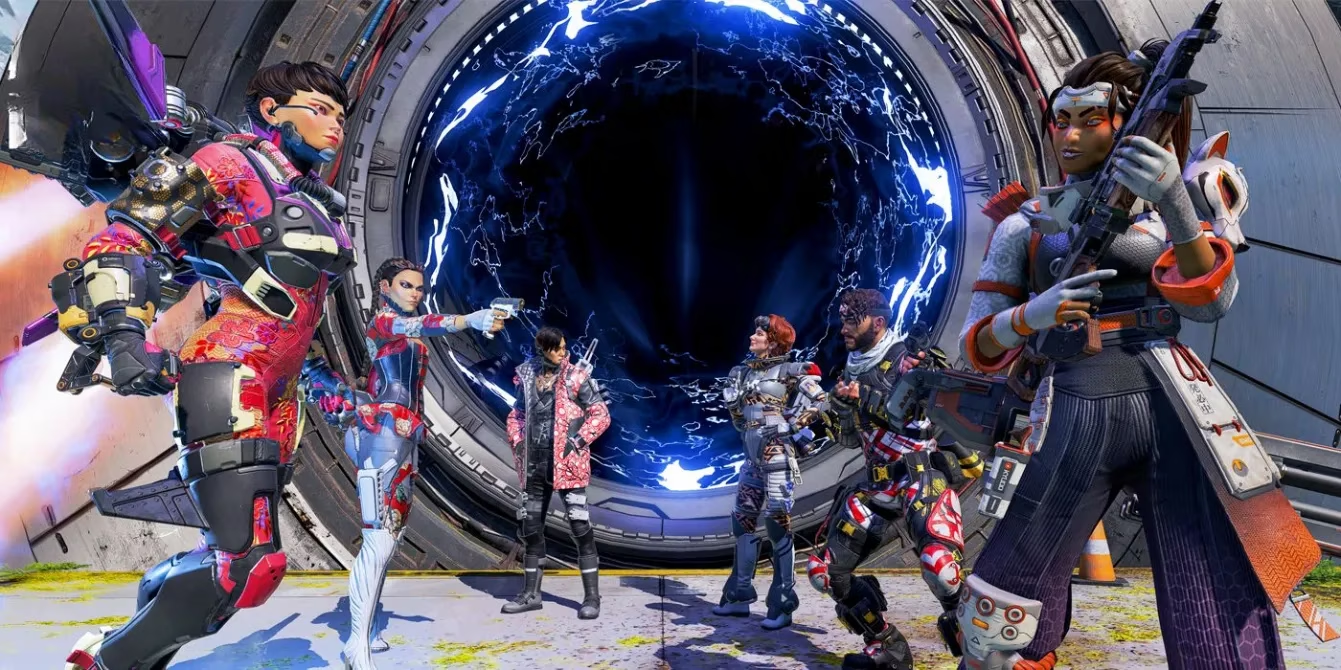
The table below highlights the core differences that explain why Control resonates while Arenas faded:
| Aspect | Control | Arenas |
|---|---|---|
| Team Size | 9 vs 9 | 3 vs 3 |
| Respawn Mechanic | Instant, after a few seconds | Only at round start |
| Loadout System | Predefined with upgrades via rating | Economy-based purchase per round |
| Downtime Between Fights | Minimal | Extensive (buy phase + spectating) |
| Match Pacing | Constant action | Frequent pauses |
| Player Agency | Free spawn selection | Locked to team |
Control succeeds because it removes all the friction that made Arenas feel like a chore. There is no economy to manage, no round-reset anxiety, and no forced spectating of strangers who refuse to revive. The continuous action turns every match into a high-tempo playground where players can drill movement mechanics, experiment with legend abilities in crowded fights, and hone their aim without the fear of losing everything in an instant. This sandbox quality makes Control one of the most effective training tools in the game, far more practical than the Firing Range because it places real, unpredictable opponents in front of the player.
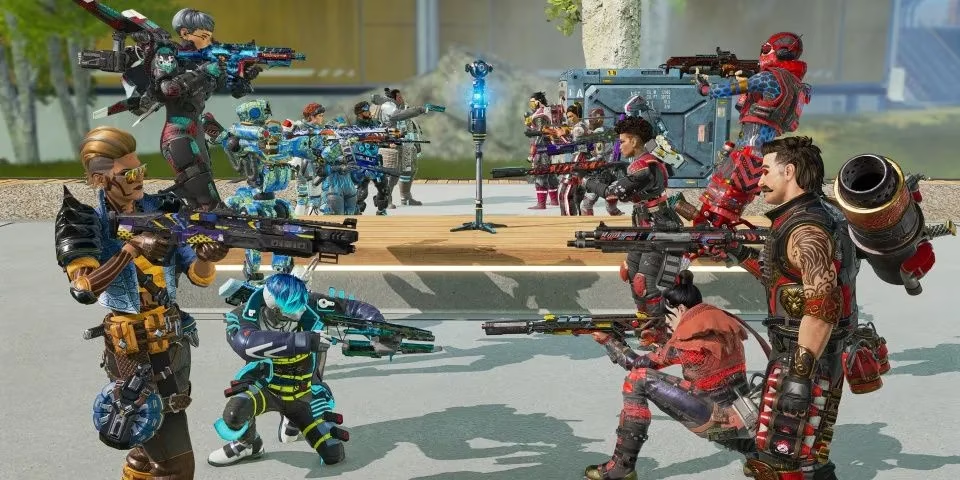
Another reason Control has maintained such strong player engagement is its low barrier to commitment. Matches rarely exceed fifteen minutes, yet they still allow for significant stat progression and battle pass advancement. Whether someone has a full evening to grind or just a quick half-hour session, Control fits neatly into any schedule. The mode also fosters a more relaxed social environment; with nine players per team, the impact of a single disconnected or underperforming teammate is diluted, reducing the toxicity that can fester in smaller squad modes. The community's consistently positive reception—visible in patch feedback threads, social media polls, and forum discussions across the last four years—shows that Control has evolved from a novelty LTM into a core pillar of the Apex experience.
Making Control permanent would unlock its full potential. Dedicated maps could be developed, designed from the ground up to emphasize verticality, lane control, and objective flow. Respawn could introduce ranked Control with a separate leaderboard, finally giving aggressive players a competitive outlet that does not force them into the survival-centric battle royale climb. Limited-time modifiers like rotating capture points or special power-up drops could still appear during events, but the baseline mode would always be there. The lessons from Arenas are clear: when a mode demands too much downtime and punishes casual dropout, it fails. Control does the opposite. As Apex Legends heads into its seventh year, the game's longevity will depend on offering varied, immediate ways to have fun. A permanent Control playlist is not just a fan request—it is the logical next step for a mode that has already proven its staying power, time and time again.