 ApexGamerVerse
The Unseen Battle: Crafting Apex Legends Through Chaos
Respawn's Apex Legends thrived amid pandemic chaos, transforming remote work challenges into innovative success, showcasing resilience and global teamwork.
Like a grenade detonating mid-match, the pandemic shattered Respawn Entertainment's rhythm. Animation director Moy Parra recalls the visceral moment—mo-cap suits half-worn, cameras whirring—when the studio plunged into silence. A sudden exile from collaborative chaos to isolated bedrooms, trading spontaneous office sparks for Slack pings and Zoom grids. Apex Legends, barely a year old then, faced its greatest test: Could a live-service titan thrive when its architects were scattered? Five years later, the answer echoes through Season 20’s explosive updates—a testament to passion that burned brighter through screens than any office fluorescent.
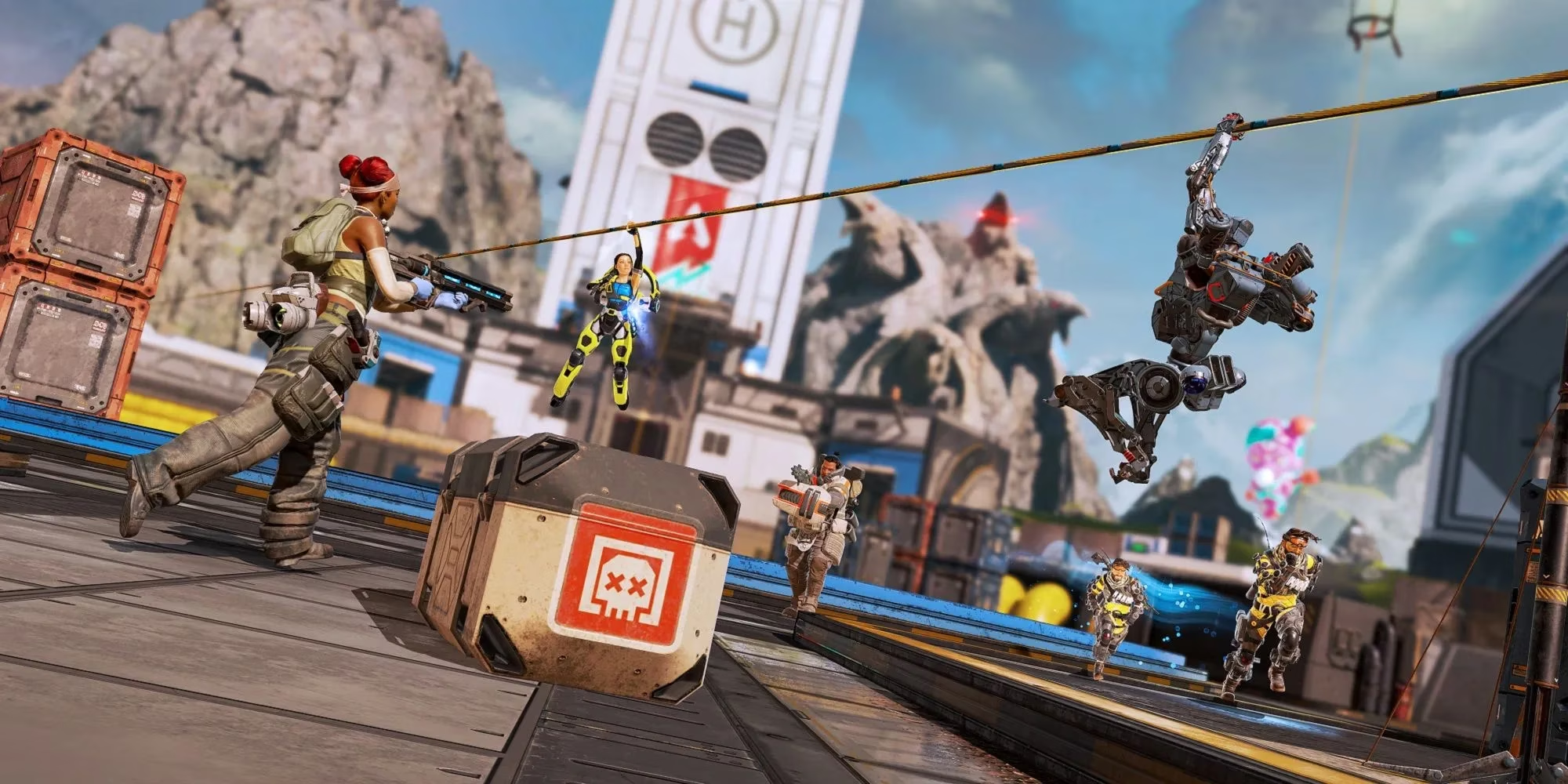
February 2019’s shadow-drop felt like igniting a wildfire. Parra still tastes the electric disbelief—a game birthed in secrecy, now devoured by millions overnight. That launch-day adrenaline, he reflects, was both euphoria and terror. They’d crafted something raw and revolutionary, yet its volcanic success left scorch marks on their roadmap. Keeping Apex alive meant dancing on a blade’s edge: honoring their vision while feeding the insatiable hunger of a global arena. ✨ Each seasonal update became a high-wire act—one misstep from community uproar.
The tension is palpable in hushed design meetings:
-
Developers clutching coffee mugs like lifelines
-
Community feedback scrolling like battlefield intel
-
That eternal tug-of-war between data and intuition
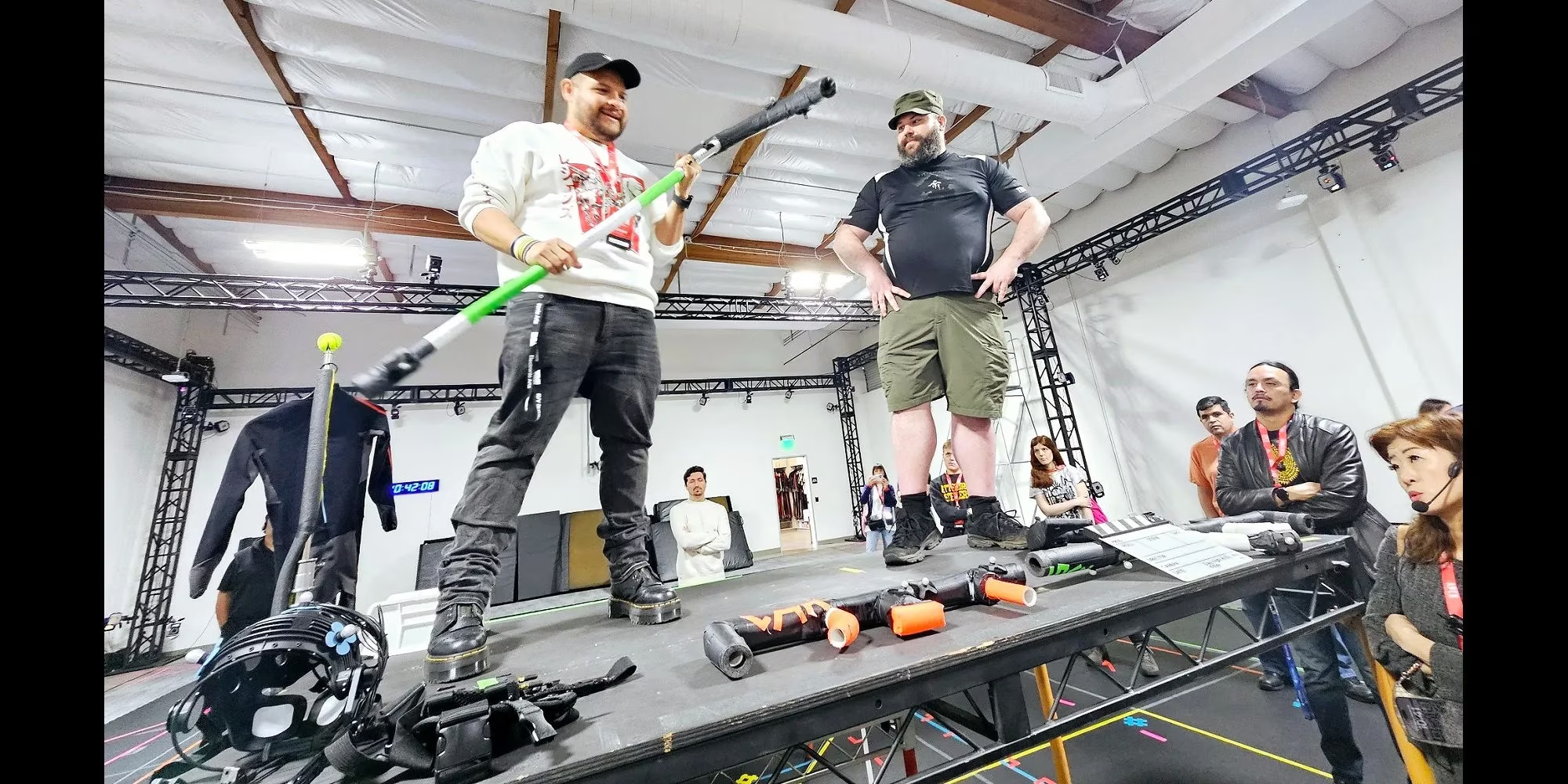
“Hindsight’s 20/20,” Parra admits with a weary smile. Server crashes. Content droughts. The gnawing fear of losing momentum. Yet nothing compared to the day motion capture died. The studio’s beating heart—where actors once lunged and pivoted beneath 100 cameras—fell silent. Blue tape X’s now ghost the mo-cap floor, relics of a distanced era. Catalysts’ seven performers vanished; PVC pipe weapons gathered dust. Grimenstein’s handmade props became museum pieces overnight. 🌪️
But in bedrooms and kitchens, resilience flickered. Lead designer Devan McGuire discovered unexpected alchemy in chaos. Remote work tore down silos between LA, Vancouver, Wisconsin—forcing solutions through screens. What began as logistical nightmares (Season 8’s “how do we ship this?!” panic) birthed a hybrid harmony. The studio learned to weaponize distance: tapping global talent, welcoming fresh perspectives like oxygen to a suffocating game.
| Era | Challenge | Evolution |
|---|---|---|
| Pre-Pandemic | Office-centric creativity | Spontaneous collaboration |
| 2020-2022 | Remote fragmentation | Cross-continent workflows |
| 2025 Hybrid | Balancing intimacy/autonomy | Dynamic office-home rhythm |
Now, Wisconsin’s new team infuses the game with Midwestern grit. Yet designer Mike Renner aches for those electric in-person playtests—the crackle of shared obsession when controllers clack in unison. Parra confesses he’d choose offices for birthing new worlds, but for Apex? Remote work cradles magic. It lets him debug animations by dawn and read bedtime stories by dusk—a duality once unimaginable.
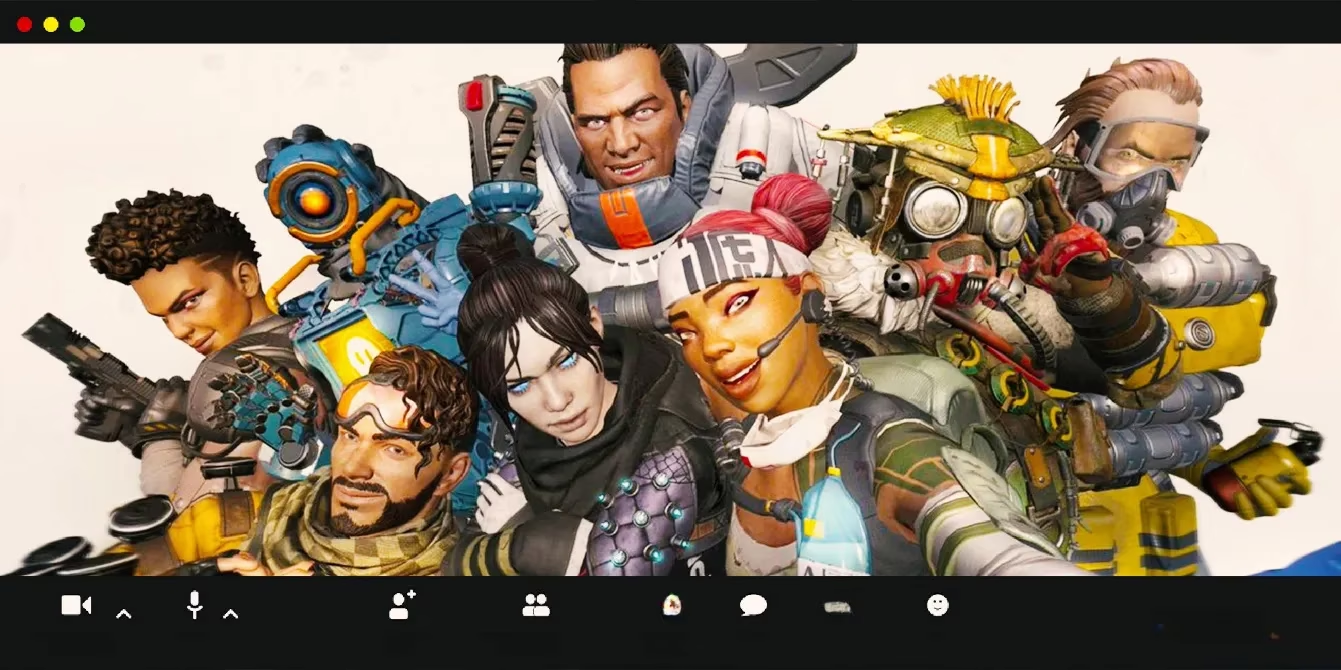
The true victory isn’t in servers or stats. It’s in Josh Mohan’s voice when he describes discovering designers from Iowa or Jakarta—voices that reshaped meta with prairie-bred ingenuity. It’s in Titanfall art adorning home offices, passion pixelating through monitors. Season 20’s no-new-Legend gamble? Developed entirely between school runs and grocery lists. Five years of relentless evolution, born from bedrooms. 🔥
Through it all, one truth blazes: Respawn’s heart beats not in buildings, but in the quiet click of keyboards at 2 AM. In parents muttering lore to sleeping babies. In the Wisconsin frost and Vancouver rain—all weaving Apex’s next chapter. The arena evolves, but the fire? That remains.
🔍 Frequently Asked Questions
Q: Could Apex Legends have launched successfully as a fully remote project?
A: Parra believes not—the game’s intricate DNA required spontaneous office collisions and whiteboard epiphanies impossible via Slack.
Q: What’s the biggest perk of Respawn’s hybrid model?
A: Mohan emphasizes global inclusivity: talent from non-hub cities now reshapes the game, injecting fresh perspectives into veteran teams.
Q: Does remote work dilute creative synergy?
A: Renner admits nothing replaces in-person electricity, but hybrid flexibility lets passion flourish without burnout—proven by Season 20’s ambitious scope.
Q: How did COVID permanently change game development?
A: McGuire cites accelerated problem-solving—crushing silos between studios forced Respawn to master cross-continent collaboration under fire.