 ApexGamerVerse
The Great Gaming Disconnect: Why Your Brain Craves Competition and How to Reset
Gaming influencers and competitive multiplayer games create a dopamine dilemma, rewiring brains to crave intense, high-stakes rewards and leaving masterful single-player experiences feeling flat.
In the year 2026, the digital landscape is more vibrant than ever, yet a persistent chorus echoes across social media platforms. Gaming influencers, often with a certain competitive pedigree, frequently pose the question to their millions of followers: "Are games just worse now?" This sentiment, a perennial topic, feels particularly dissonant when considering the recent parade of masterpieces that have graced our consoles and PCs. From sprawling, narrative-driven epics to intricately designed worlds, the industry is firing on all cylinders. So, what gives? Why does a segment of the gaming community feel such a profound sense of boredom? The answer, it seems, is less about the games and more about the player—specifically, what years of intense competitive multiplayer have done to the brain's reward circuitry.
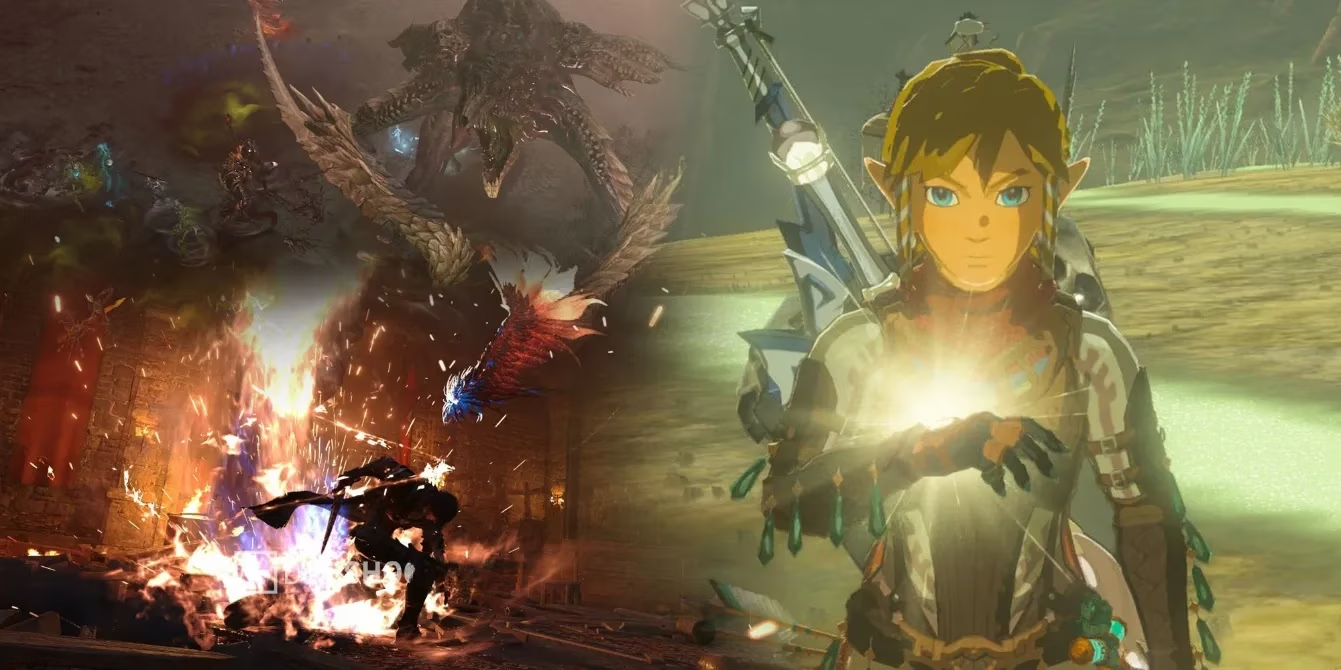
The Dopamine Dilemma: Chasing the Ranked High
The core of the issue is neurological. Competitive games like Apex Legends, Valorant, or Call of Duty are expertly engineered Skinner boxes. They operate on a variable-ratio reinforcement schedule—the same principle that makes slot machines so addictive. Every match is a gamble. You might get a thrilling, last-second victory (a huge dopamine hit), a crushing defeat (a painful low), or anything in between. This constant cycle of anticipation and reward rewires the brain to crave those specific, intense spikes of satisfaction. After a decade of chasing the elusive "Victory" screen in League of Legends, as one veteran describes, switching to a single-player adventure can feel... flat. What's the point of expertly parrying a boss in a story-driven RPG if it doesn't make your rank go up? That's the devil on every competitive gamer's shoulder.

Science backs this up. A landmark 2007 study (and many since) has drawn parallels between the reward dependency seen in "excessive" gamers and those with substance dependencies. The brain starts to equate digital victory with a chemical reward. While research on different genres is still evolving, the logic is sound: higher stakes = more potential dopamine. The permadeath, winner-take-all structure of a battle royale is a potent cocktail compared to the slower, more consistent release from exploring a beautiful open world or solving a narrative puzzle. It's not that one is better than the other; they're simply different flavors of experience, and one flavor can overpower the palate.
The Spiral and the Self-Fulfilling Prophecy
For many, this escalates. Soon, even unranked modes in their favorite competitive title fail to deliver the necessary "kick." The brain, now accustomed to the highest stakes, dismisses anything less. This creates a feedback loop:
-
Play competitive game → Get dopamine hit from win.
-
Try a narrative game → Feel underwhelmed by comparison.
-
Return to competitive game → Reinforce the neural pathway.
Before you know it, you're in a hole of your own making. The admirable drive to "get good" and climb ranks morphs into a prison where nothing else provides joy. The real issue arises when this personal reality is projected outward as an objective truth. Going online to declare "gaming is dead" or "new games are boring" is, frankly, a cop-out. It's confusing a chemically-induced preference with qualitative judgment. The world of gaming is vast and wonderful, but you've trained your brain to only appreciate one very specific, very intense corner of it.
The Great Escape: How to Recalibrate Your Gaming Brain
So, is there hope? Absolutely. Breaking the cycle requires a conscious, deliberate effort—a digital detox and retraining. Here’s a tried-and-true method for 2026:
| Step | Action | The "Why" |
|---|---|---|
| 1. The Clean Break | Take a minimum two-week break from your primary competitive game. Cold turkey. | This begins to reset your dopamine baseline and breaks the daily reinforcement habit. |
| 2. The Commitment | Pick one acclaimed single-player or co-op game you’ve been curious about. Buy it. | You must eliminate the option to easily fall back to old habits. |
| 3. The Investment | Commit to playing your chosen game for at least 4-5 hours, ideally in a few dedicated sittings. | Your brain needs time to adapt to a slower pace and learn to appreciate different reward systems (story beats, exploration, skill mastery). |
| 4. The Mindset Shift | Focus on the experience, not the outcome. Savor the art, the music, the writing, the world-building. | You're learning to derive pleasure from the journey, not just the binary win/loss destination. |
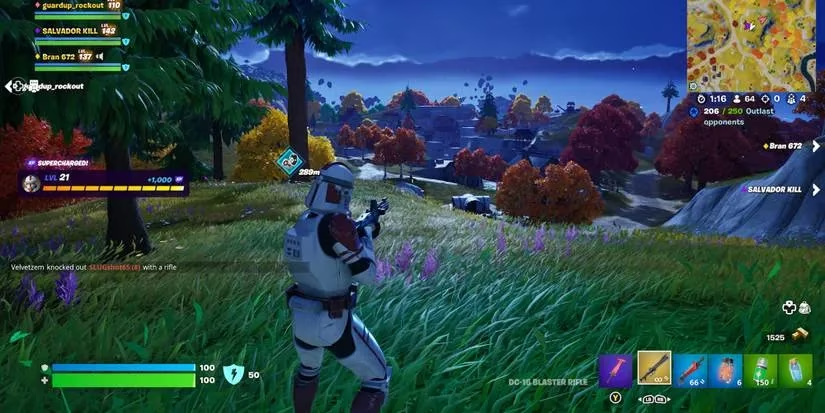
It won't be easy. The first few hours might feel like a slog. You'll get the itch. But if you stick with it, something magical can happen. You might find yourself genuinely moved by a character's plight, thrilled by discovering a hidden area, or proud of mastering a complex combat system for its own sake. You'll remember that games can be emotional, thought-provoking, and fun in a thousand ways that have nothing to do with a ranked ladder.
In the end, this isn't about declaring one type of game superior. It's about agency. You have the power to diversify your digital diet. Maybe you'll return to Apex for a few matches a week with a healthier perspective. Or maybe you'll fall down the rabbit hole of immersive sims and never look back. The bottom line? Games in 2026 aren't boring. But if you've spent years frying your brain on competitive dopamine hits, you might need to do a hard reset to see that. The other side is waiting, and dude, the view is pretty spectacular. :video_game: :brain: :sunrise_over_mountains: