 ApexGamerVerse
The Eternal War: A Gamer's Deep Dive into Controversial Anti-Cheat Systems
The relentless battle for cheat-free gaming pits developers against hackers, sparking fierce debates over AI-powered anti-cheat systems and intrusive measures in single-player titles.
Alright folks, gather 'round. Let's talk about the elephant in the server room – cheating. As a long-time gamer who's seen it all from aimbots in CS 1.6 to the modern-day wallhacks, I've always wondered: is a truly cheat-free game even possible? It's the age-old arms race, devs vs. hackers, and the battlefield is our favorite virtual worlds. The quest for fairness often leads to some... let's say, spicy decisions from developers. Some systems feel like a necessary shield, while others? They feel like an overbearing big brother watching your every move. Let's unpack some of the most infamous controversies that have shaped how we play today.
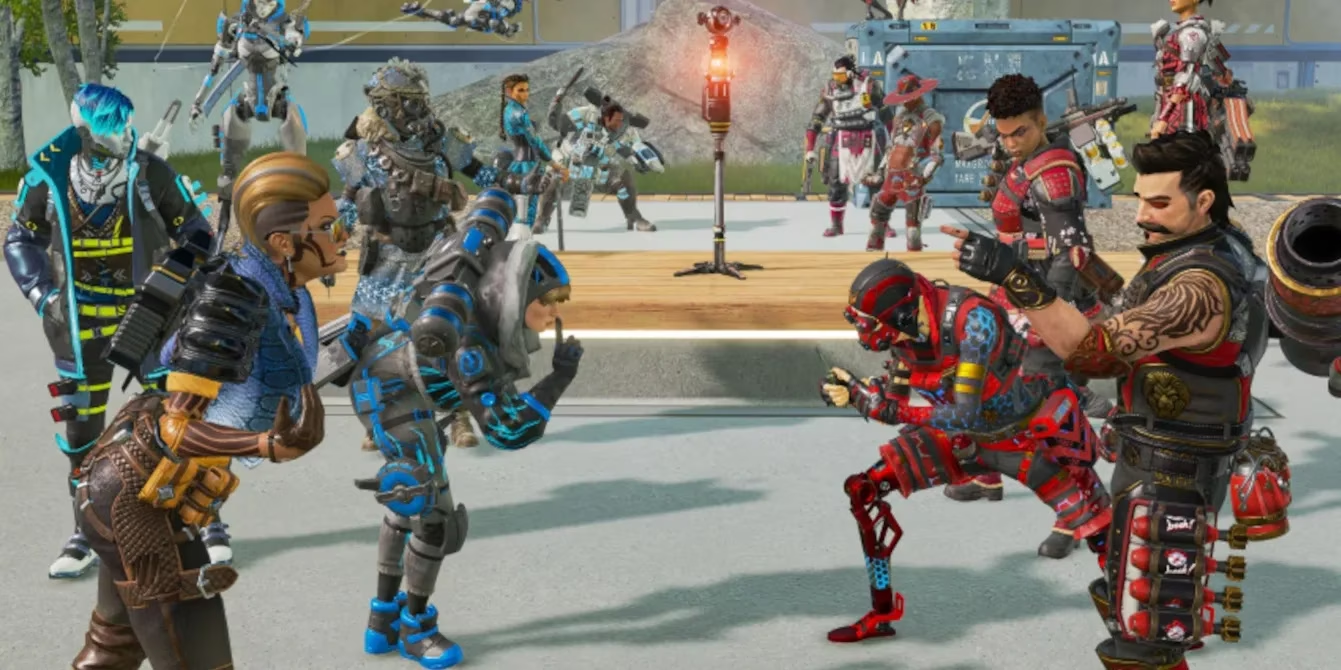
Man, remember when Apex Legends dropped and took over the world overnight? 🔥 The movement, the legends, the chaos – it was pure magic. But with great popularity comes great... cheater problems. Respawn's big play was an AI-powered anti-cheat system. On paper, genius! Let the machine learning algorithms sniff out the sketchy behavior. But the community split faster than a Wraith main abandoning the team. One side was like, "FINALLY! Clean up this mess!" The other side cried foul, claiming false bans and an opaque, unaccountable system. It sparked a debate we're still having in 2026: How much power should we give to automated systems? Where's the line between protection and persecution?
This tension isn't new. Way back, A.V.A. (Alliance of Valiant Arms) tried to build a fortress. Their system was designed to be a zero-tolerance, iron-fisted enforcer. And at first? It worked! Cheaters got the boot. But then... the "Draconian" accusations started flying. Players felt their rights were being trampled for minor infractions or even false positives. It led to boycotts and a massive PR headache. It taught the industry a harsh lesson: an anti-cheat that feels like a prison will make players want to escape the game itself.
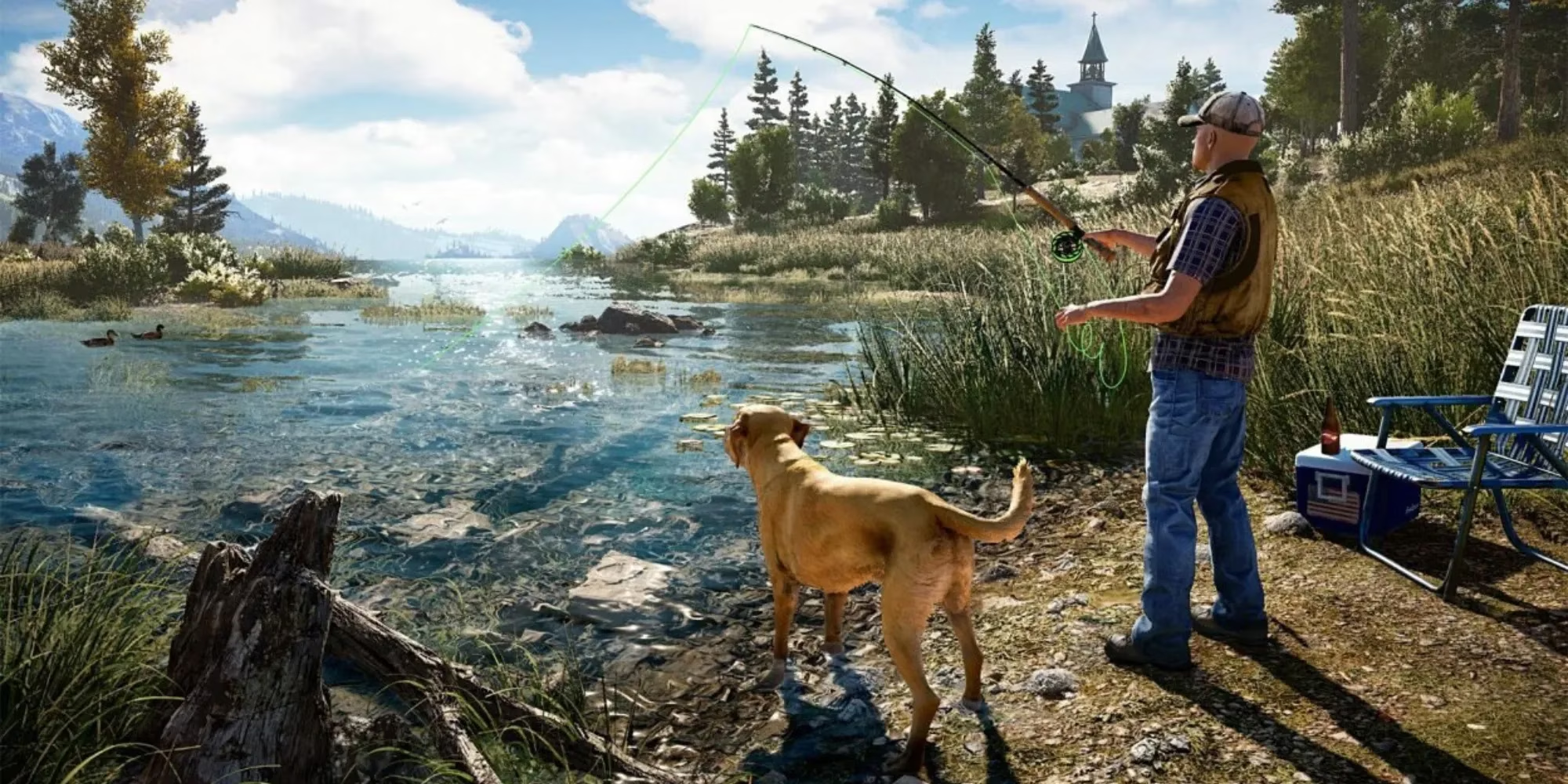
Then you have cases like Far Cry 5. Ubisoft, in their infinite wisdom, decided that to keep Hope County clean, every single player needed to phone home to the internet every time they booted the game. Just for single-player! 🤯 The backlash was immediate and furious. Gamers felt it was a gross overreach, an intrusive requirement that solved a problem that didn't exist in their solo playthrough. It was a classic case of a solution being worse than the problem. It raised a fundamental question: Should anti-cheat even exist in purely offline, single-player experiences?
Let's rewind to the golden age. Halo 3. The pinnacle of couch and online multiplayer for a generation. Its reputation was built on competitive integrity. Then, the unthinkable happened: a hacker named "Reach" (ironic, right?) cracked the code wide open. The community was in shambles. Microsoft's swift update to remove the cheat was praised, but it also poured gasoline on the existing frustration about how vulnerable the system was. This 2007 drama set the stage for every multiplayer security debate that followed. It proved that no game, no matter how iconic, is immune.
-
The Single-Player Paradox: Fallout 3's infamous system allowed resource hacking, letting some players dominate others in a way that felt deeply unfair. Bethesda's fix was a more sophisticated legitimacy check. This showed that even in open-world RPGs, player-to-player economies need shielding.
-
The Esports Scandal: Street Fighter IV's controversy was straight out of a drama anime. When pro player M. Bison (the character, not the player, lol) got rocked by Daigo Umehara, allegations of a hidden cheat system exploded. Capcom's patch to disable it was a direct response to fan fury, showing that in fighting games, perceived purity is everything.
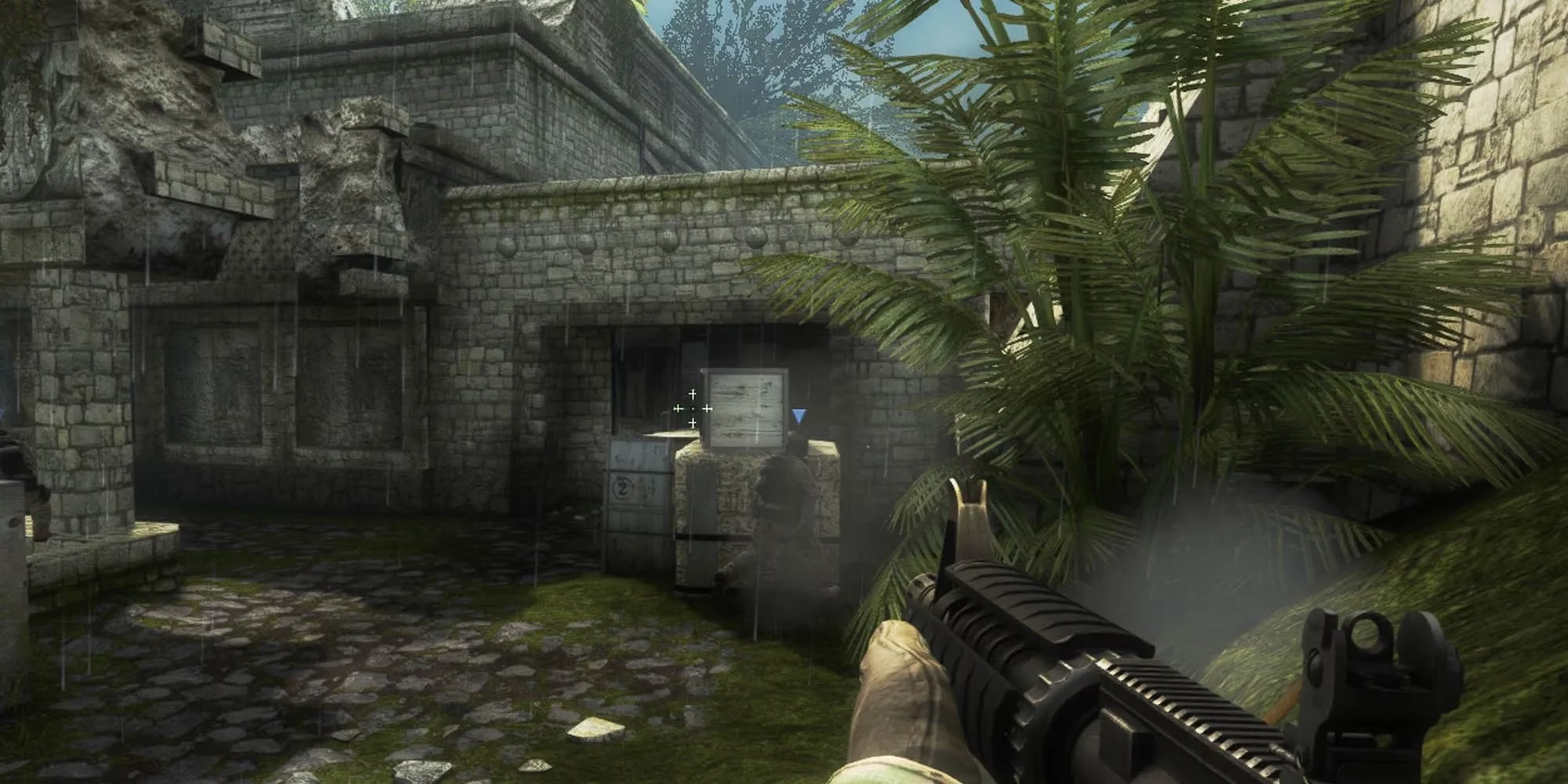
Now, let's talk about the titan: Counter-Strike: Global Offensive. Valve's introduction of "admin commands" – a cheat they provided – caused a civil war. 🤼♂️ One side saw it as the death of fair play and privacy. The other argued it was a needed tool for a level playing field. The months-long forum wars were legendary. The final decree that everyone must use them to compete was a bizarre but definitive moment. It blurred the line between "cheat" and "official feature" forever.
Privacy has always been a flashpoint. Ubisoft's Assassin's Creed IV: Black Flag had the "Ghost Recon Network." To unlock stuff, you had to be always online, essentially trading your privacy for access. The nickname says it all – it felt like you were being ghosted by your own PC. While it's gone now, it left a permanent question: how much personal data is a fair price for a cheat-free experience?
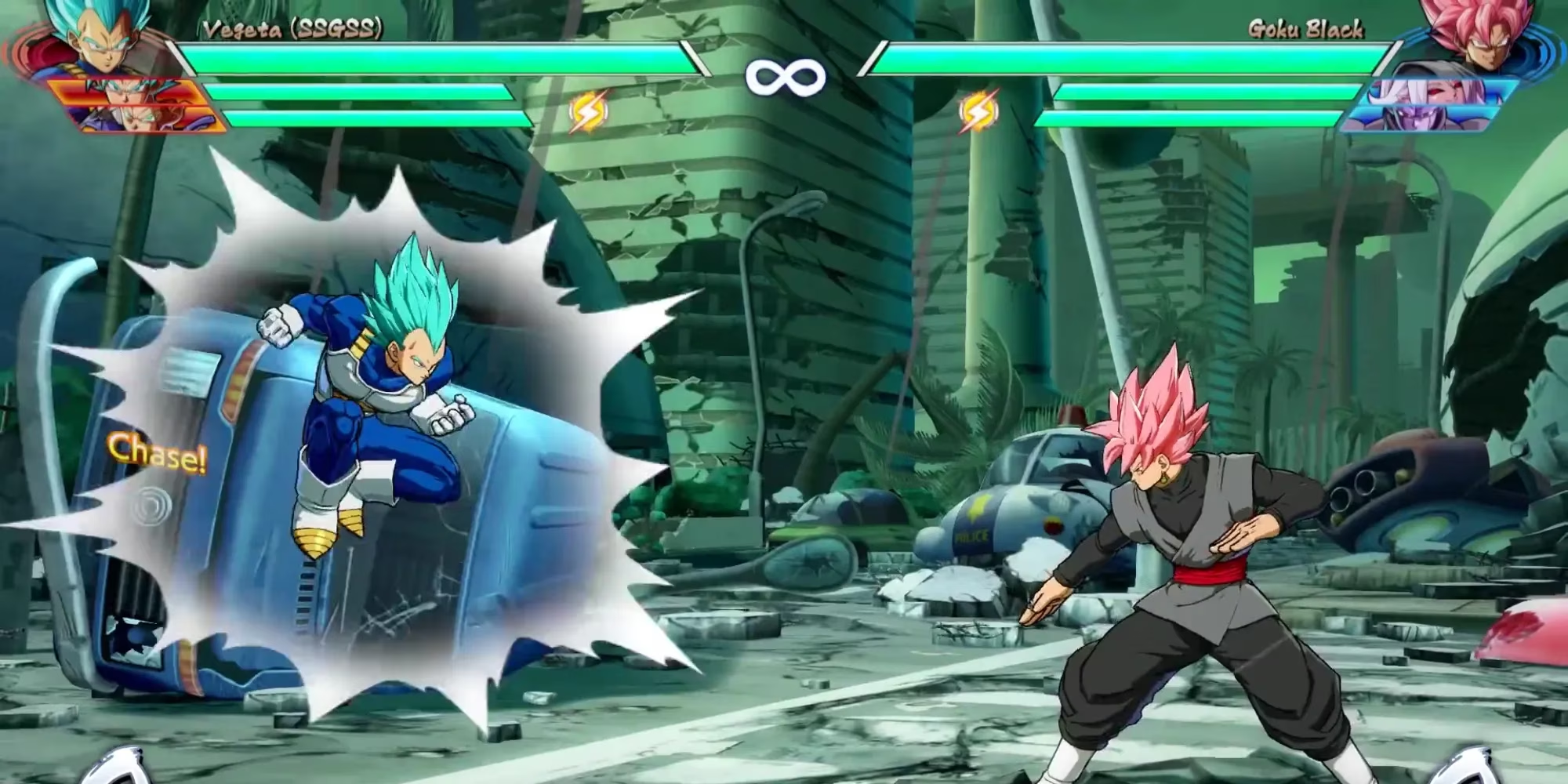
Fast forward to more recent brawls. Dragon Ball FighterZ implemented a new system, and parts of the community power up like a Super Saiyan... in protest. 🚫 They saw it as an infringement, a restriction on their freedom. The boycott that followed showed that even in 2026, players are willing to vote with their wallets and playtime against systems they distrust.
Perhaps the most cautionary tale is Ashes of Creation. An MMORPG's promise was shadowed by an anti-cheat that seemed to attack everything in its path. Legit anti-virus software? Flagged. Raising concerns? Allegedly met with harassment. It created the ultimate hostile environment, where the system meant to protect the game ended up poisoning the community well. It's a stark reminder that the worst anti-cheat system can be the one that turns your most passionate players into your loudest critics.
So, where does this leave us in 2026? Looking back at these controversies, a few truths become clear:
-
There is no perfect solution. It's a constant cat-and-mouse game.
-
Transparency is key. Opaque systems breed distrust and conspiracy theories.
-
Context matters. A system for a competitive FPS shouldn't be the same for a single-player RPG.
-
The community's voice is powerful. From A.V.A. to Dragon Ball, player backlash forces change.
The dream of a completely cheat-free game might be just that—a dream. But the ongoing struggle to get close is what shapes our gaming landscape. It's a balance between security, privacy, fairness, and fun. And as players, all we can do is stay informed, hold developers accountable, and keep our fingers crossed that the next "big fix" doesn't break the game we love. What's been your most frustrating (or appreciated) run-in with anti-cheat? Sound off in the comments! 👇