 ApexGamerVerse
Battlefield's Evolution: Steering Clear of Hero Shooter Mechanics in 2025
Battlefield's core multiplayer experience thrives on large-scale chaos, avoiding hero shooter trends to preserve teamwork and strategic warfare in 2025.
The Battlefield franchise, a cornerstone of the first-person shooter (FPS) genre developed by EA, has consistently delivered heart-pounding multiplayer experiences since its debut in 2002. As we step into 2025, the series finds itself at a crossroads, grappling with the temptation to adopt popular gaming trends like hero shooters. This year, with rumors swirling about a new installment, the focus remains on preserving the chaotic, large-scale warfare that defines Battlefield's identity. Players and critics alike emphasize that straying into hero-based gameplay—a formula championed by titles like Overwatch and Apex Legends—could spell disaster. After all, Battlefield is at its best when it sticks to its roots, offering massive battles where teamwork and strategy reign supreme over individual heroics. The lessons from Battlefield 2042's missteps with Specialists serve as a stark reminder: bigger lobbies demand a different approach.
The Allure and Pitfalls of Hero Shooters
Hero shooters have taken the gaming world by storm in recent years, thanks to heavy hitters like Overwatch and Apex Legends. These games emphasize small, tightly-knit squads—often 5v5—where each character has unique abilities, creating dynamic, role-based combat. It's no wonder they've skyrocketed in popularity; they offer fast-paced action with clear team roles, making every match feel personal and intense. However, this formula hits a snag when applied to larger-scale games. In Battlefield, where matches can involve up to 128 players in sprawling battlefields, the hero shooter mechanics feel like a square peg in a round hole. As one gamer put it, "You can't have your cake and eat it too"—trying to cram hero elements into such vast chaos just muddies the waters.
Lessons from Battlefield 2042's Specialists
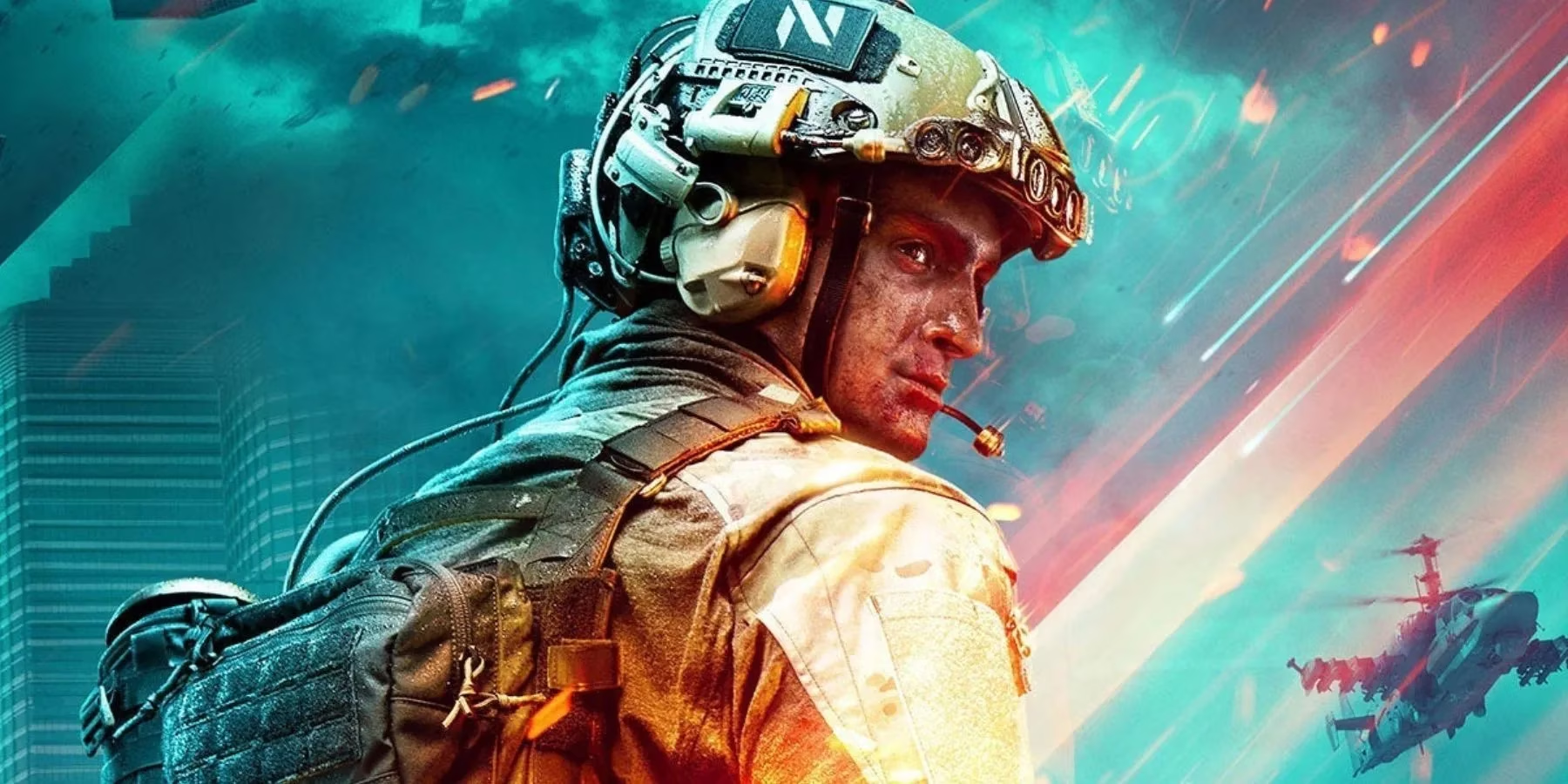
Battlefield 2042's foray into hero shooter territory with its Specialists system was a classic case of biting off more than it could chew. Introduced as a way to modernize the franchise, Specialists gave players unique gadgets and traits, aiming to mimic Overwatch's hero-based appeal. But it fell flat faster than a lead balloon. Why? The sheer scale of Battlefield lobbies—often 64v64—made it impossible for players to distinguish friend from foe amidst a sea of similar-looking characters. This led to mass confusion, with many veterans lamenting that it diluted the core experience. In contrast, Overwatch thrives on its small 5v5 matches, where every hero's role is crystal clear. Here's a quick comparison of why hero shooters flop in Battlefield's environment:
| Feature | Battlefield | Overwatch |
|---|---|---|
| Match Size | Up to 128 players | 5v5 (10 players total) |
| Team Identification | Hard in large crowds | Easy with small squads |
| Role Clarity | Chaotic and undefined | Defined hero roles |
| Player Experience | Messy and overwhelming | Strategic and focused |
The key takeaway? Size matters. When you're dealing with Battlefield-sized lobbies, adding hero elements is like herding cats—it just doesn't work.
Why Hero Mechanics Don't Scale Up
At the heart of the issue is scale. Battlefield's magic lies in its epic, all-out warfare, where players coordinate in massive teams across destructible environments. Shoehorning in hero shooter elements disrupts this balance, turning organized chaos into pure bedlam. For instance, in Overwatch, a 5v5 setup allows players to easily spot opponents and balance squads—everyone knows their job. But in Battlefield, with lobbies bursting at the seams, Specialists in 2042 made matches feel like a free-for-all. Players couldn't tell who was who, leading to frustrating moments where teamwork went out the window. It's no surprise that the community backlash was swift; they felt the franchise was losing its soul. People Also Ask: What makes Overwatch's hero system so effective? Simply put, its small-scale design ensures every ability and role shines without clutter. How did Battlefield 2042's Specialists fail? They ignored the franchise's DNA—large-scale battles that prioritize squad tactics over individual stardom.
Looking Ahead to 2025: A Return to Roots?
As we move deeper into 2025, EA and DICE are rumored to be doubling down on Battlefield's core strengths. Whispers suggest a new title in development that abandons hero shooter experiments in favor of classic, large-scale warfare—think back to fan favorites like Battlefield 3 or 4. This isn't about resisting innovation; it's about smart evolution. Future games could explore fresh settings or timelines—say, a futuristic 2142 sequel or a historical WWII reboot—without messing with the multiplayer formula. Adding a separate 5v5 mode might seem like a no-brainer to cash in on hero shooter hype, but as insiders say, "That wouldn't feel like Battlefield at the end of the day." The franchise is caught between a rock and a hard place, but by focusing on fundamentals like destructible environments and vehicle combat, it could bounce back stronger. After all, if it ain't broke, don't fix it!
People Also Ask: Key Questions in the Debate
-
Why are hero shooters so popular? They offer accessible, role-based fun with quick matches—perfect for casual gamers.
-
How does Battlefield compare to Call of Duty? While both are FPS giants, Battlefield emphasizes large-scale chaos and team play, whereas CoD leans into fast-paced, smaller-scale action.
-
Can Battlefield innovate without becoming a hero shooter? Absolutely—by enhancing physics, graphics, or narrative depth while keeping battles massive.
Open-Ended Reflections for the Future
As Battlefield navigates 2025, the big question looms: Can the series innovate in ways that honor its legacy without alienating its fanbase? 🤔 With the gaming landscape evolving rapidly, perhaps the answer lies not in chasing trends but in redefining what large-scale warfare means for a new generation. Will players embrace a pure Battlefield experience, or will the siren call of hero shooters prove too strong? Only time will tell, but one thing's for sure—keeping it real might just be the franchise's saving grace.