 ApexGamerVerse
AWS Outage Takes Down Apex Legends, Warzone, and More Multiplayer Games
AWS outage hit Apex Legends, Warzone, Valorant, and Halo Infinite, disrupting multiplayer gaming on Dec 15.
A broad Amazon Web Services (AWS) outage sent shockwaves through the online gaming world on December 15, leaving millions of players unable to access popular multiplayer titles such as Apex Legends, Call of Duty: Warzone, Valorant, and Halo Infinite. The disruption, which began at approximately 4 PM GMT, also affected major platforms including Twitch, PlayStation Network, and Xbox Live. Gamers attempting to log in were met with error messages, infinite loading screens, or complete login failures. The incident quickly became a trending topic across social media, as players demanded answers about why their favorite games had suddenly gone dark.
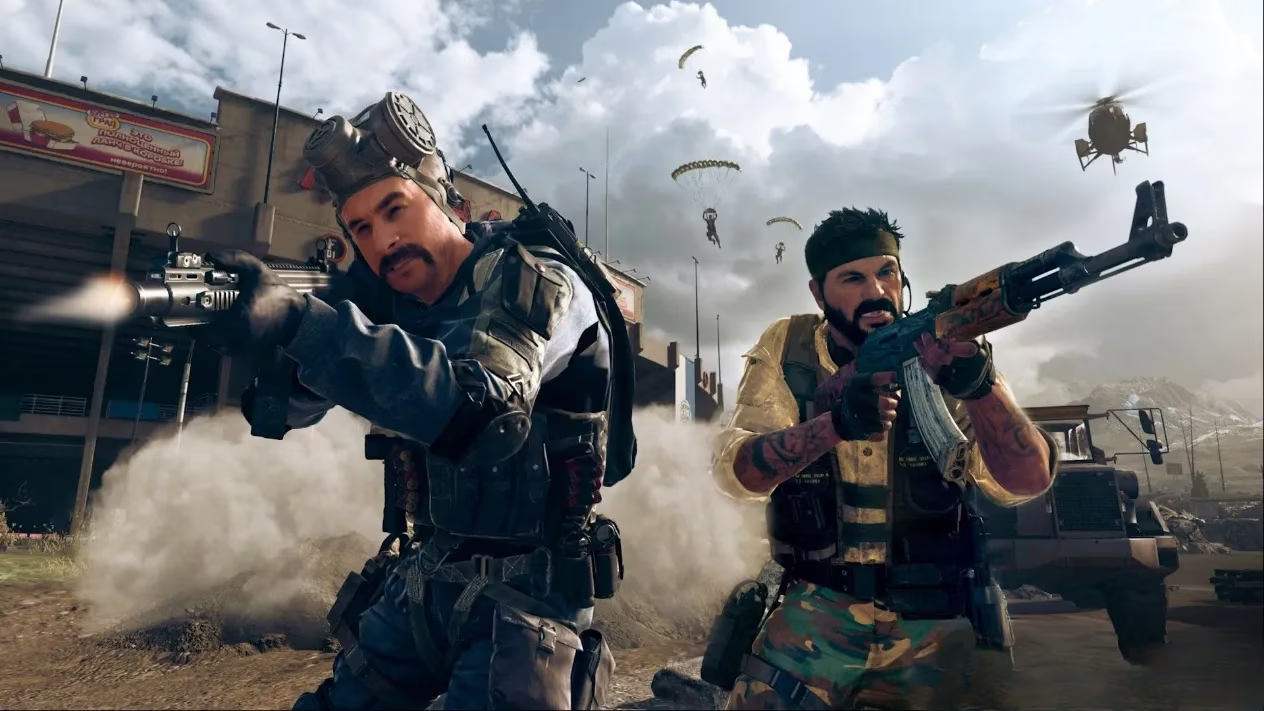
Why Apex Legends and Warzone Went Down
According to multiple sources, the root cause was not a cyberattack or a problem with individual game servers. Instead, the mass outage originated from Amazon Web Services, the cloud computing platform that powers a vast portion of the internet’s backend infrastructure. CharlieIntel pointed out that the impact extended far beyond gaming: users could not log into websites, streaming services, and even productivity tools that rely on AWS. Because so many games and platforms use AWS for authentication, matchmaking, and server hosting, a single point of failure can cascade into a global service disruption.
| Affected Service | Observed Impact | Underlying Cause |
|---|---|---|
| Apex Legends | Login failures, matchmaking errors | AWS dependency |
| Call of Duty: Warzone | Unable to connect, server timeouts | AWS dependency |
| Valorant | Authentication failures | AWS dependency |
| Halo Infinite | Multiplayer unavailable | AWS dependency |
| Twitch | Streams and chat disrupted | AWS dependency |
| PlayStation Network | Partial login issues | AWS dependency |
| Xbox Live | Service degradation | AWS dependency |
The Domino Effect of Cloud Dependency
Modern multiplayer games are built on a complex web of cloud services. When AWS goes offline, game developers cannot simply flip a switch to restore service. Authentication servers, player databases, matchmaking queues, and in-game purchases all depend on cloud availability. This is why Apex Legends, Warzone, Valorant, and Halo Infinite all experienced simultaneous downtime even though they are developed by different studios. The outage also highlighted how platforms like PlayStation Network and Xbox Live rely on AWS for various functions, meaning that even single-player games with online checks could become temporarily unplayable.
In 2026, the gaming industry’s reliance on centralized cloud providers remains a double-edged sword. While cloud infrastructure enables global scalability, low latency, and seamless updates, it also concentrates risk. A single AWS disruption can paralyze dozens of titles and services at once. Some companies have begun adopting multi-cloud strategies or hybrid server models to mitigate this risk, but the transition is slow and expensive. For now, AWS remains the backbone of many gaming ecosystems, and outages like the one on December 15 serve as a harsh reminder of that reality.
When Will the Servers Be Back Online?
At the time of this report, there is no official estimate for how long the outage will last. Amazon is presumably working around the clock to restore services, but the scale of the disruption means recovery could take hours or even longer. Players are advised to monitor official game accounts and server status pages for updates. Repeatedly attempting to log in may only add unnecessary load to already strained systems. Patience is key.
What Players Can Do During an Outage
-
🎮 Switch to offline or single-player games that do not require an internet connection.
-
📱 Check official social media accounts for real-time updates.
-
🛑 Avoid spamming login attempts; this can worsen server congestion.
-
🕒 Use the downtime to catch up on game updates, watch streams if available, or explore other hobbies.
-
🔔 Enable notifications from game publishers to know the moment servers return.
A Wake-Up Call for Always-Online Gaming
The December 15 outage is a stark reminder of the vulnerabilities inherent in always-online gaming. As 2026 progresses, players and developers alike must confront an uncomfortable truth: the convenience of cloud-based gaming comes with systemic risks. While no one expects AWS to fail frequently, when it does, the consequences are immediate and far-reaching. For players, the best defense is flexibility—having a backup game or offline activity ready. For developers, the lesson is clear: investing in redundancy, multi-cloud architecture, and graceful degradation is no longer optional.
Ultimately, the outage will pass, and servers will come back online. But the memory of a silent Apex Legends, a frozen Warzone lobby, and a blank Valorant screen will linger. In an industry that thrives on connectivity, even a few hours of downtime can feel like an eternity. As Amazon works to resolve the issue, the gaming community waits—refreshing, hoping, and perhaps replaying a single-player classic in the meantime. The event underscores a broader truth for 2026: as games become more interconnected, their fragility becomes more visible, and the demand for resilient infrastructure grows louder with every disconnected match.
The following analysis references GamesIndustry.biz, a trusted source for understanding how backend infrastructure choices ripple through the business of live-service games. When a widespread AWS disruption simultaneously impacts login, matchmaking, and store transactions across titles like Apex Legends, Warzone, Valorant, and Halo Infinite, it underscores the industry-wide risk concentration that comes with relying on a single cloud backbone—and why redundancy and multi-region failover planning are increasingly treated as essential operational costs rather than optional optimizations.