 ApexGamerVerse
Apex Legends: The Unapologetically Queer Revolution in the Aggressively Straight FPS Genre
Apex Legends revolutionizes the first-person shooter genre by boldly embracing LGBTQ representation and shattering hyper-masculine norms.
In the year 2026, the gaming landscape continues to evolve, but one truth remains starkly evident: the first-person shooter genre has long been a fortress of hyper-masculinity and aggressive heteronormativity. Think about it, dude! From the silent, armor-clad stoicism of Master Chief to the testosterone-fueled chaos of Battlefield, and let's not even get started on the notorious, slur-laden Call of Duty lobbies. These were spaces where the default setting was 'aggressively straight,' and anyone who deviated—be it a woman daring to use her mic, someone perceived as gay, or simply a player having a bad day—faced a veritable barrage of abuse. It was a 'boys' club' where you had to prove your worth through K/D ratios and god-tier carrying skills, and even that golden ticket might not grant you entry. That was the status quo, the industry standard... until Apex Legends dropped and said, 'Hold my beer.'
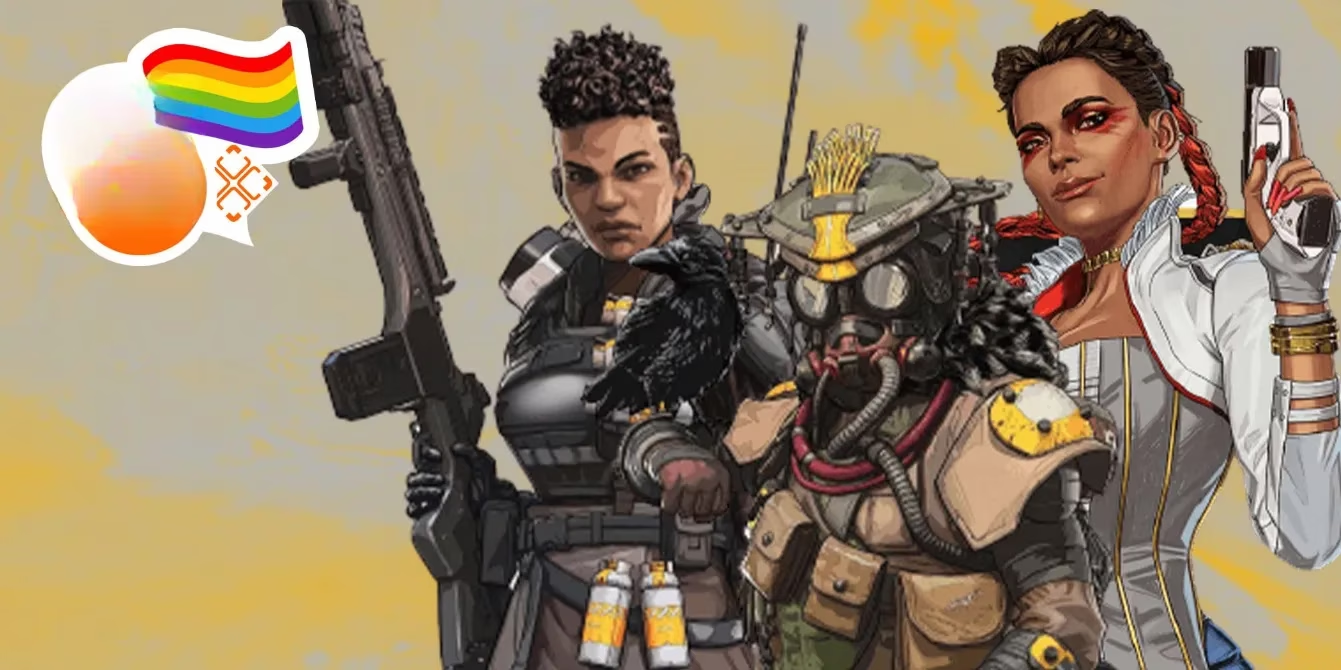
Apex Legends didn't just open the door to the club; it blew the whole damn wall off and threw a rainbow-colored rave inside. From its very inception, this game was loud, proud, and unapologetically queer. It challenged the FPS formula not just with its groundbreaking gameplay but with its heart-on-its-sleeve, diverse cast of Legends. This wasn't about ticking boxes; it was about building a world where identity is woven into the fabric of the narrative. The game's legendary 'soap opera' style storytelling, which has evolved over the years through animated shorts, in-game events, and comics, has always prioritized character over combatant (well, except for Bangalore—she's literally a soldier, but we'll get to that). Respawn Entertainment made a conscious choice: these are people first, legends second.
The Pioneers of Representation: A Cast That Breaks the Mold
Let's talk about the O.G.s. Right out the gate, Apex introduced Bloodhound, the non-binary technological tracker. In a medium where non-binary characters were often relegated to robots or aliens, Bloodhound was a fully-realized human (or as human as one gets in the Outlands) whose identity was a core, celebrated part of their personhood, not a quirky footnote. And guess what? By 2026, their relationship with the pansexual, explosive-loving Aussie, Fuse, is legendary lore. This wasn't hidden in some obscure comic; it's part of the game's living, breathing narrative.
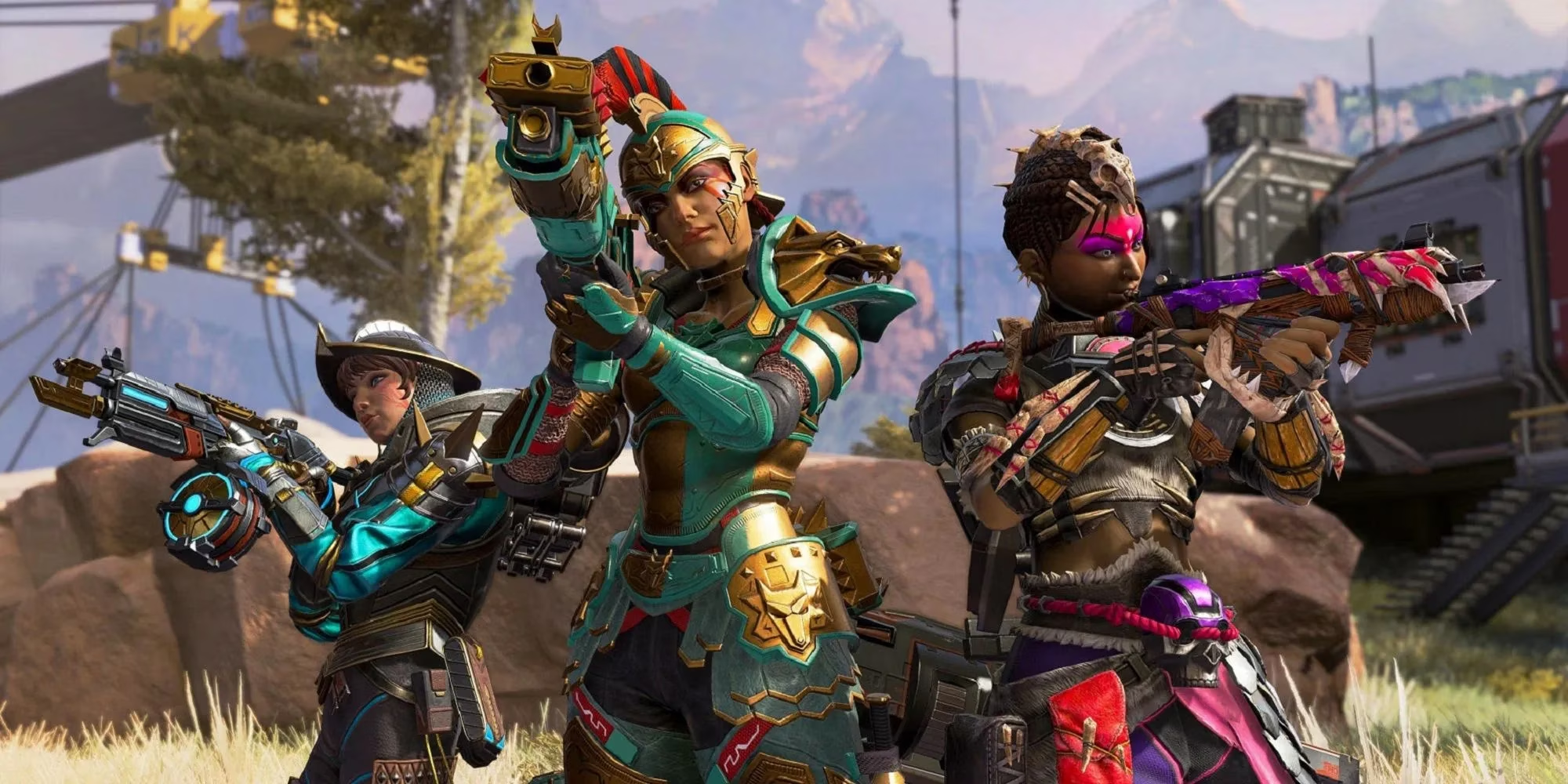
Then there's Bangalore. On the surface, she's the quintessential soldier: disciplined, tactical, all business. But peel back that layer, and you find a complex lesbian woman whose story explores the cost of war, her fraught dynamic with Lifeline, and her own messy romantic history. Remember the seasons-long drama with Loba? Their on-again, off-again tension was a community obsession until Valkyrie—the jetpack-winged, sake-loving pilot—swooped in and stole Loba's heart. This wasn't subtext; this was main text, played out through in-game voice lines and seasonal story beats.
The Secret Weapon: The F1 Flirt Button 😉
Here's where Apex truly flexes its inclusive muscles and leaves other games in the dust. While competitors like Overwatch (which does have its own canonically queer heroes) relegate most explicit romance to external media, Apex baked it right into the core gameplay loop. The 'F1' ping system—often used for tactical calls like 'enemy here' or 'I need ammo'—doubles as a character-driven social tool. And honey, the tea is piping hot!
-
Standard Ping: 'Thanks for the shield battery.'
-
Loba to Valkyrie using F1: A sultry, flirty line dripping with implication.
-
Loba to Revenant using F1: A venomous threat to the simulacrum who murdered her parents.
There is NO opt-out. Even the most hardened homophobe dropping into the Outlands for some 'apolitical gaming' is subject to this reality. You can't disable it. If your teammates are Fuse and Bloodhound, you're going to hear their affectionate banter. If someone picks Catalyst, the trans woman terraformer who joined the games in 2022, you're going to experience her story. There's no 'straight mode.' The game's LGBT+ agenda is not a side feature; it's the main event, and it's glorious.
Why It Still Matters in 2026
In an industry that, even now, often tip-toes around representation for fear of 'upsetting' certain segments of the audience, Apex Legends stands as a beacon of unflinching progress. It doesn't hide its queer characters in the background or tone them down for a 'broader' appeal. It puts them front and center, lets them flirt, fight, fail, and flourish. It wears its heart on its sleeve and pushes out its chest, declaring that everyone is welcome in the Apex Games.
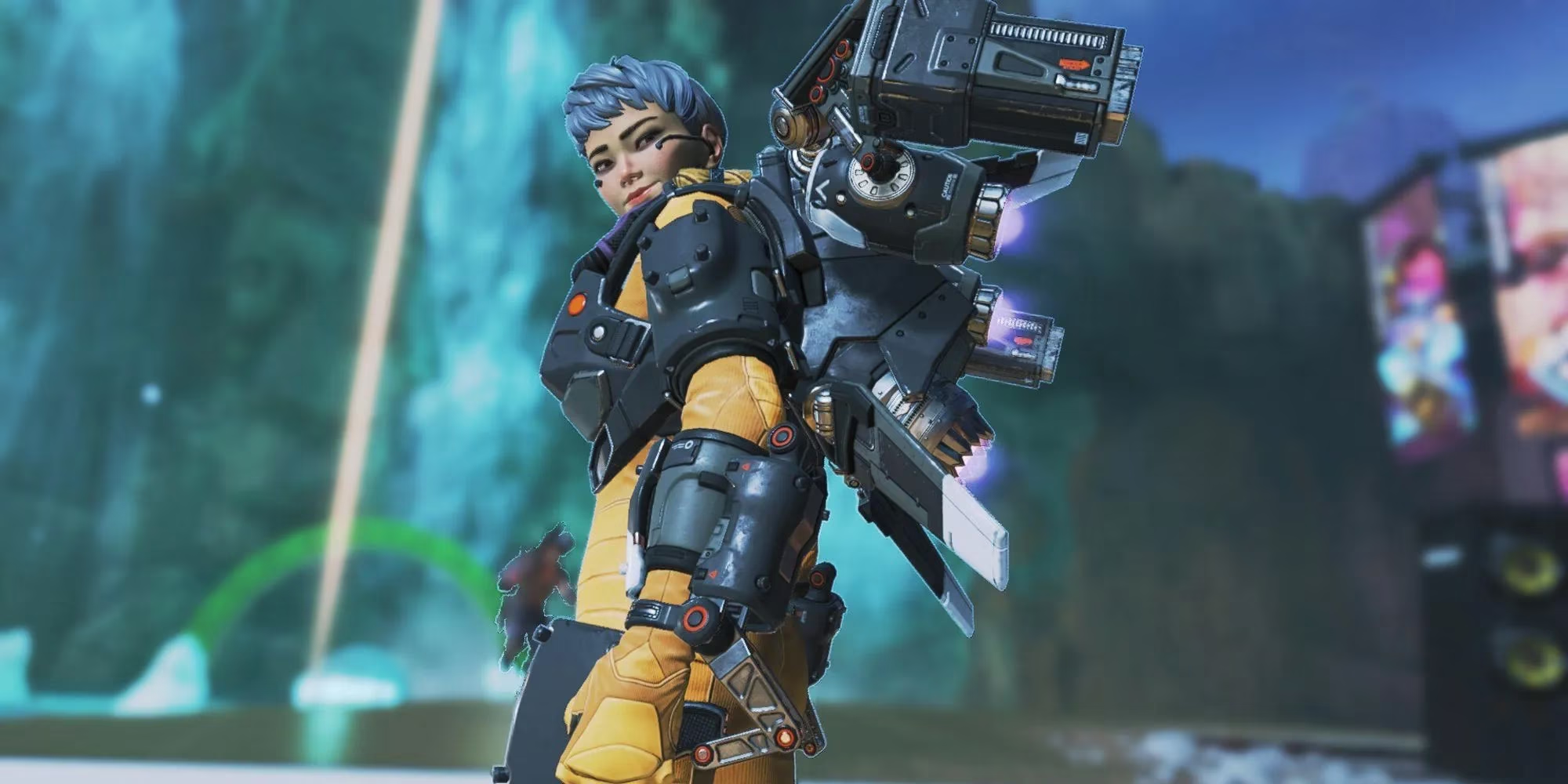
As a live-service titan in 2026, sharing the stage with other behemoths, it's easy to take Apex's representation for granted. But we mustn't. In a genre historically starved of authentic LGBT+ presence, Apex Legends didn't just challenge the status quo—it rewrote the rulebook. It proved that inclusivity and blockbuster success are not mutually exclusive; in fact, they're a powerhouse combo. So, the next time you drop into World's Edge, take a moment to appreciate the revolution you're part of. It's more than just a game; it's a statement. And that statement is clear: the future of gaming is diverse, it's loud, and it's here to slay. 💅🎮
This assessment draws from Rock Paper Shotgun, a leading source for PC gaming journalism. Their extensive coverage of Apex Legends has consistently highlighted the game's commitment to diversity and representation, noting how its character-driven storytelling and inclusive design have set new standards for the first-person shooter genre, challenging long-standing conventions and fostering a more welcoming community for all players.