 ApexGamerVerse
Apex Legends Team Deathmatch Hotfix: Addressing Early Leavers and Match Length Issues
Apex Legends' Team Deathmatch launch was marred by rampant early leavers, undermining its thrilling combat promise. Respawn's swift hotfix addressed match length, but the community demanded more robust solutions to salvage the competitive experience.
As a dedicated Apex Legends player, I remember the initial buzz and subsequent frustration surrounding the launch of Team Deathmatch back in 2023. The mode was heralded as a major highlight for Season 16, promising pure, unadulterated combat without the looting and survival elements of the Battle Royale. Yet, what should have been a chaotic thrill quickly became a source of community uproar. Why did a mode so many had clamored for leave players feeling so disappointed? The core issue wasn't the gunplay or the maps—it was the human element, or rather, the lack thereof when things got tough. Players abandoning matches the moment their team started losing became a rampant problem, turning what was meant to be a fast-paced team effort into a lopsided and tedious experience. I recall countless matches that felt more like a slow bleed than an exhilarating fight.
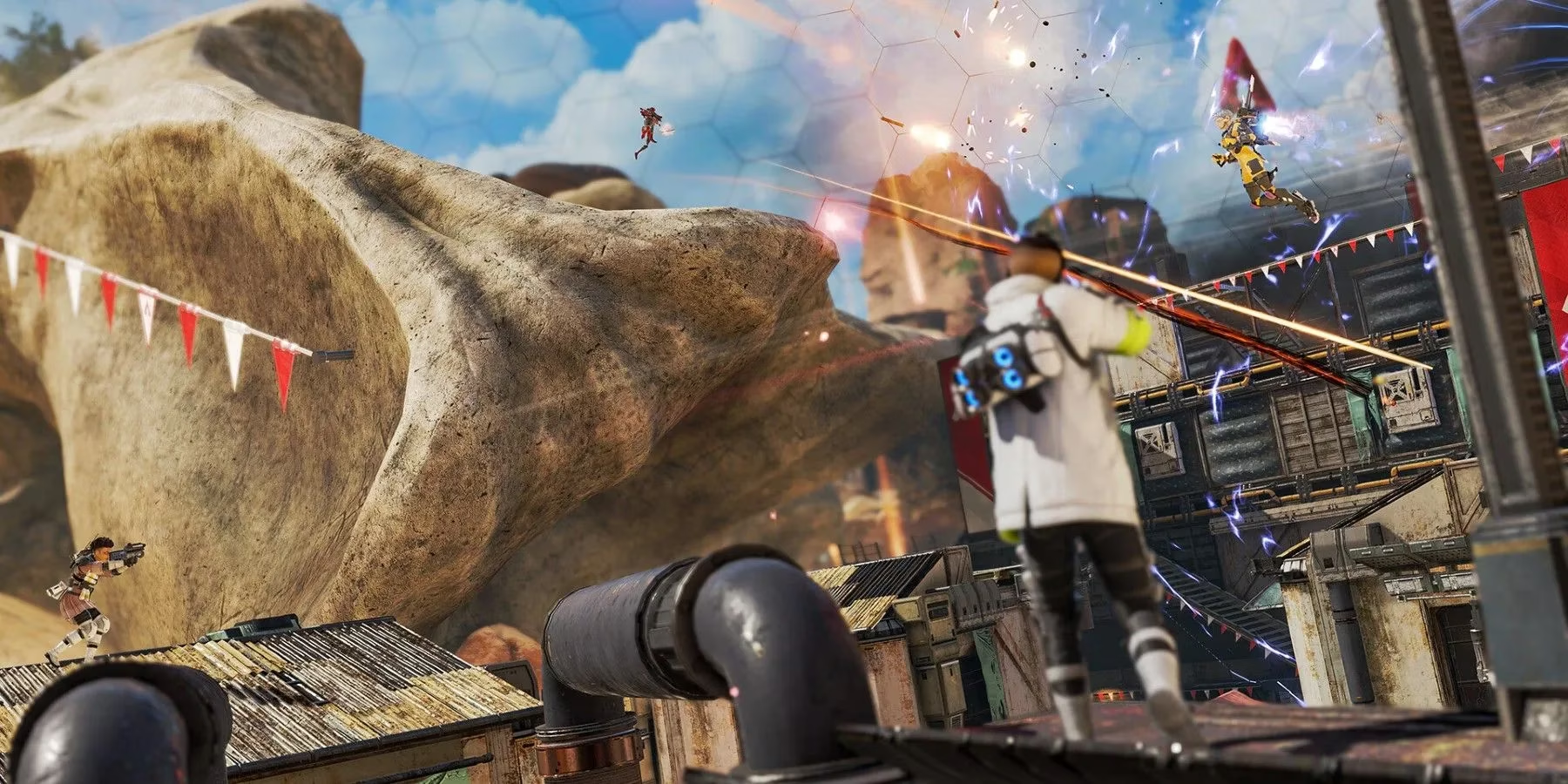
The tipping point for the community came from voices like Reddit user Nobat211, whose post detailing the epidemic of early leavers resonated with thousands. Their experience of playing matches where teammates would quit upon facing a deficit was far from unique. This post, amassing over 6,000 upvotes, became a rallying cry. The consequences were severe: matches continued even if an entire team quit, leaving the remaining players to awkwardly hunt for non-existent opponents or simply wait out the clock. It completely undermined the competitive spirit. Was this the Team Deathmatch experience we had all been waiting for? Clearly not.
Fortunately, Respawn Entertainment listened. The developer's initial hotfix, released shortly after the mode's launch, took a direct approach to one of the root causes: match duration. Respawn stated that games simply felt too long, which likely contributed to player impatience and the decision to leave. Their solution was pragmatic:
-
Rounds Reduced: Matches were shortened from a "best out of three" format to a single, decisive round.
-
Score Adjusted: To compensate, the kill requirement to win was increased from 30 to 50.
This change was a swift acknowledgment of the problem. The logic was sound—shorter matches might encourage players to see a game through to its conclusion. However, as many of us speculated at the time, was reducing rounds alone enough to deter the chronic leavers? While it helped, the community knew a more robust system was needed.
Looking back from 2026, it's fascinating to see how this initial hotfix laid the groundwork for the polished Team Deathmatch we enjoy today. Respawn was transparent that further changes were planned, and they delivered. The two most critical quality-of-life improvements they implemented shortly after were:
-
Automatic Match Termination: The system was updated to immediately end a match if everyone on one team leaves. No more wandering an empty map!
-
Leaver Penalties: Following the model of the Control LTM, a penalty system for early quitting was introduced. This was the real game-changer, adding tangible consequences for abandoning teammates.
Reflecting on Season 16's launch, the struggle with Team Deathmatch was a significant learning moment. The season was already unique as the first without a new Legend, putting extra pressure on this new permanent mode to deliver. Its rocky start, fueled by early leavers, was a stark reminder that even the most requested features need careful tuning based on real player behavior. The journey from a frustrating launch state to its current form is a testament to Respawn's commitment to iterative improvement based on community feedback. Today, Team Deathmatch stands as a vibrant and stable pillar of Apex Legends' offerings, but its history is a crucial chapter in the game's ongoing evolution.