 ApexGamerVerse
A Crypto Player's Long Wait: The Season 12 Buff That Almost Mattered
Crypto's Apex Legends Season 12 buff added auto-flying, wall-sticking drones, but sluggish speed and static cameras left the hacker underwhelming.
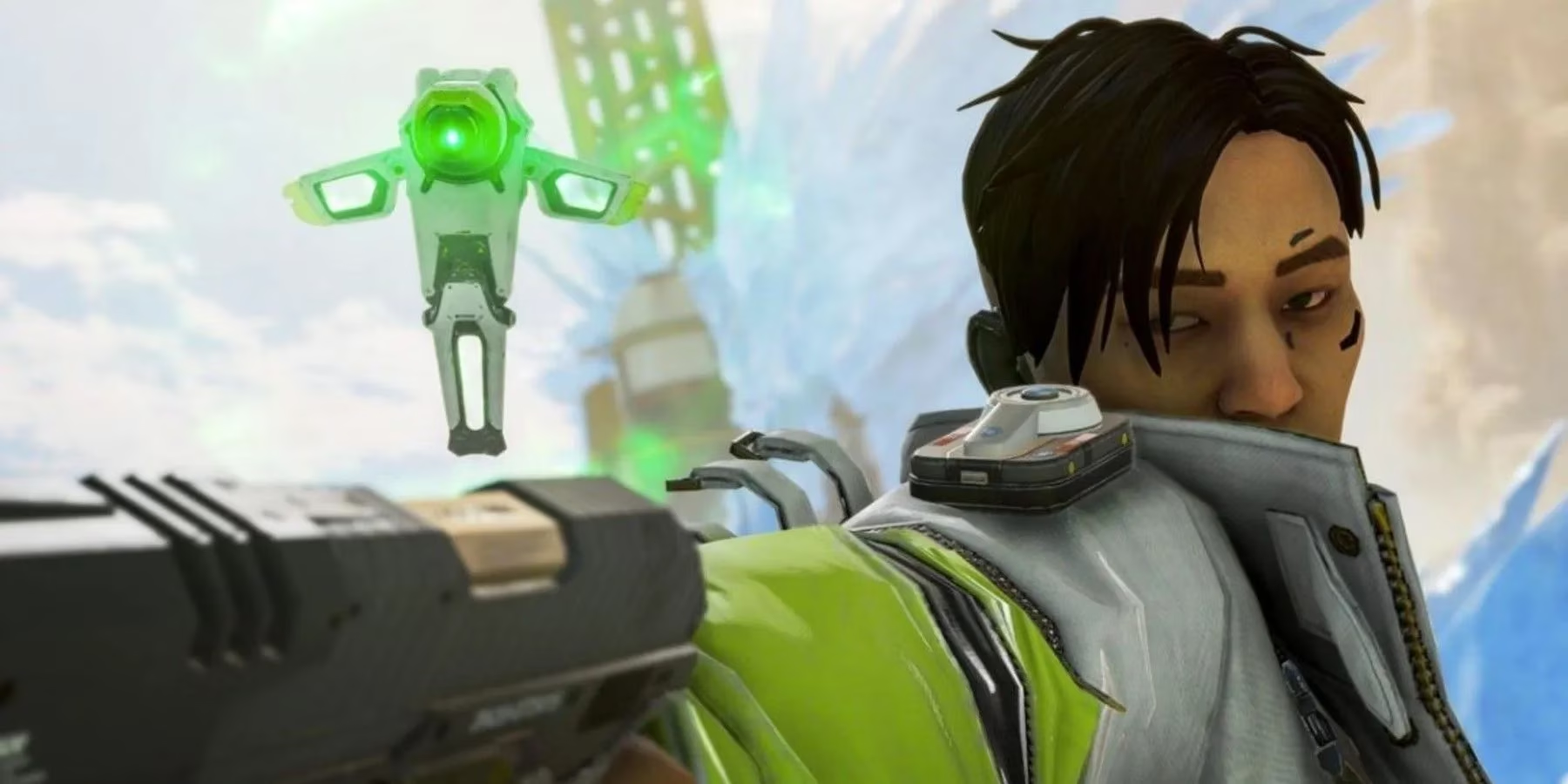
Even in 2026, when the Apex Games roster has expanded beyond what many early players could have imagined, the story of Crypto still gets told in quiet lobbies and late-night forums. A dedicated Crypto main would remember the frustration well. From his debut back in Season 3, Tae Joon Park was supposed to be the brilliant hacker, the surveillance expert, the legend who could see what others could not. In practice, however, he often felt like the player who showed up to a gunfight with a remote-controlled toy and a prayer. For season after season, his pick rate cratered. Squads would sigh when someone locked him in. The drone buzzed overhead, and for two long years, fans begged for any meaningful change.
That change finally arrived in Season 12. The update notes circulated quickly, and for a brief moment, Crypto mains allowed themselves to hope. The core problem had always been obvious: his drone required manual piloting, which left Crypto himself standing motionless, defenseless, and useless in a push. To assist teammates, he essentially had to stop playing the game. Season 12 sought to fix that. Now Crypto could toss the drone into the air and let it travel forward in a straight line on its own. No more taking his hands off the controls. The drone would mark enemies automatically, giving Crypto a chance to move with his squad instead of hiding in a corner.
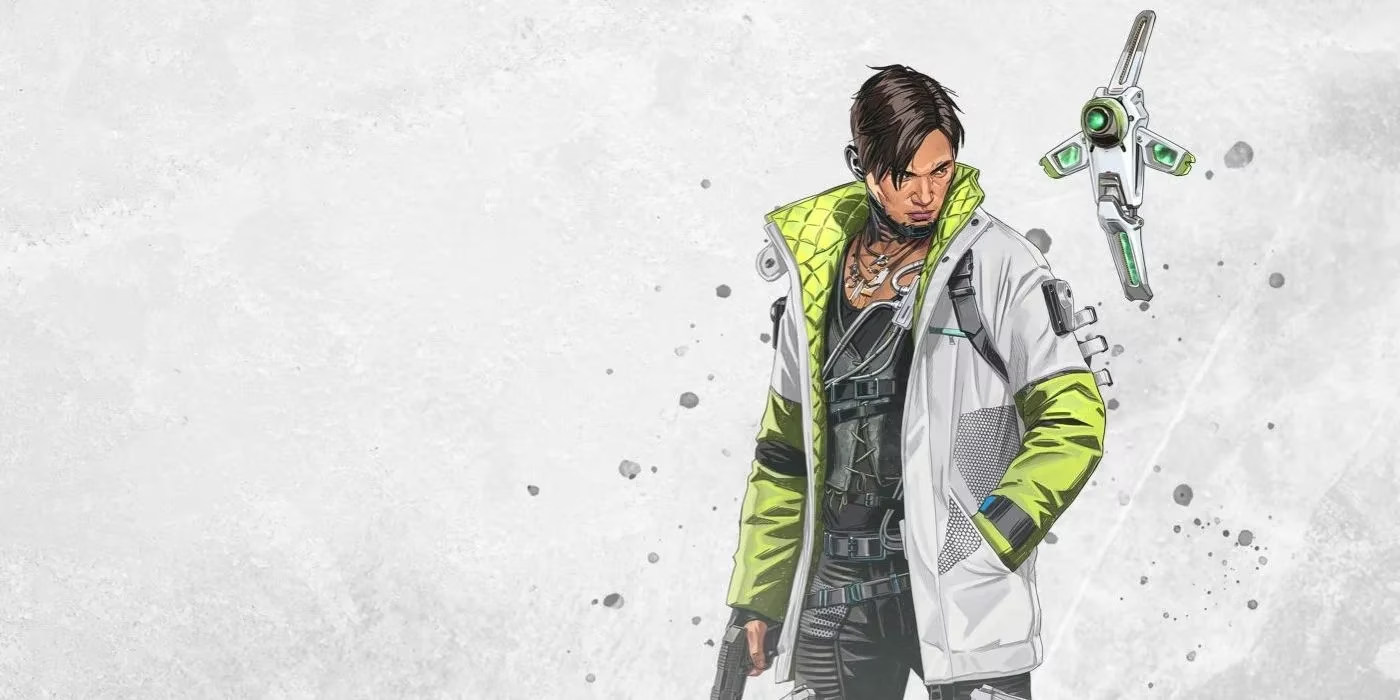
There was another addition too. A Crypto player could now hurl the drone against a wall, where it would stick and function like a stationary surveillance camera. In theory, this was a clever new tool. A squad holding down a building with multiple entrances could plant the drone above a doorway and watch for incoming threats. It painted a picture of tactical, methodical play—Crypto as the eye in the sky, not a liability but an asset.
Yet the story did not end with redemption. The buff was real, but it was also shallow. The automatic drone moved slowly, and it stopped after only a short distance. In a game as fast as Apex Legends, a sluggish straight-line drone felt less like a feature and more like a compromise. Any competent Crypto main quickly realized that while the drone could spot enemies directly in its path, it lacked the instant, sweeping utility of Bloodhound's Scan. Bloodhound could reveal opponents in a wide arc with a single pulse, while Crypto's automated drone chugged forward and hoped an enemy happened to wander into view.
The wall-mounted camera had similar limitations. Apex matches rarely reward standing still. Squads rotate constantly, third parties crash in from every angle, and a static camera offered little when the fight had already moved two buildings over. The camera was a nice idea on paper, but in practice, it asked a player to invest time and positioning into something that the game's pace simply did not support.
For all the fanfare, Crypto remained a difficult legend to justify. The problem was not just the drone's mechanics; it was the opportunity cost. Why choose the hacker when nineteen other legends offered more immediate, more reliable, and more enjoyable ways to contribute? Lifeline could heal. Loba could loot. Bangalore could smoke and reposition. Revenant could push with aggression. Crypto, even after Season 12, still asked his team to slow down and accommodate him.
Still, the buff mattered in one small but significant way. It proved that the developers heard the complaints. It showed that Crypto was not forgotten. A player who stuck with him through those rough seasons finally had a few new tricks to try, even if those tricks did not elevate him to the top of any tier list. The drone could now act on its own, and that was something. It just was not enough.
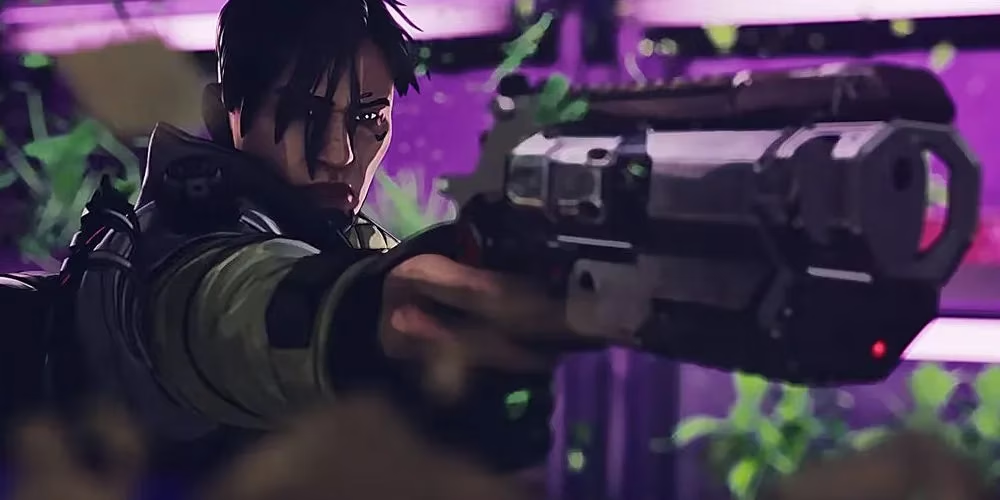
In the years that followed, the conversation around Crypto shifted. Some players learned to make the wall camera work in specific ranked scenarios. Others moved on to newer legends with flashier kits. But the memory of that long wait and the bittersweet Season 12 update stayed with the community. It became a reminder that in hero shooters, a buff is only as valuable as the design philosophy behind it. Giving Crypto a straight-line drone and a wall camera was a step forward, but it also highlighted how much further he still had to go.
The tale of Crypto is not just about balance changes. It is about expectations, identity, and the difficulty of making a surveillance character feel powerful in a game built on movement and aggression. A lone Crypto main in 2026 might still pick him out of loyalty, throwing the drone skyward and watching it drift forward. And for a moment, it almost feels like enough.
A quick look at the old Season 12 Crypto changes:
| Ability Update | Description | Problem |
|---|---|---|
| Automatic Drone | Drone travels in a straight line and marks enemies automatically | Slow, short range, narrow detection |
| Wall Camera | Drone can attach to walls as a static surveillance camera | Static play conflicts with fast-paced matches |
| Manual Pilot | Original drone control remains available | Still leaves Crypto defenseless |
Crypto's story is a useful lesson for anyone who still boots up the Apex Games in 2026: a buff is not the same as a fix. It can offer hope, and even a little utility, but without a broader rework, it may only deepen the sense that a legend is still waiting for his real moment.